-
Table of Contents
Muscle Fiber Hypertrophy with Nandrolone
Nandrolone, also known as 19-nortestosterone, is a synthetic anabolic-androgenic steroid that has been used in the field of sports pharmacology for decades. It is commonly used by athletes and bodybuilders to enhance muscle growth and performance. One of the main effects of nandrolone is muscle fiber hypertrophy, which is the increase in size and strength of muscle fibers. In this article, we will explore the pharmacokinetics and pharmacodynamics of nandrolone and its role in muscle fiber hypertrophy.
Pharmacokinetics of Nandrolone
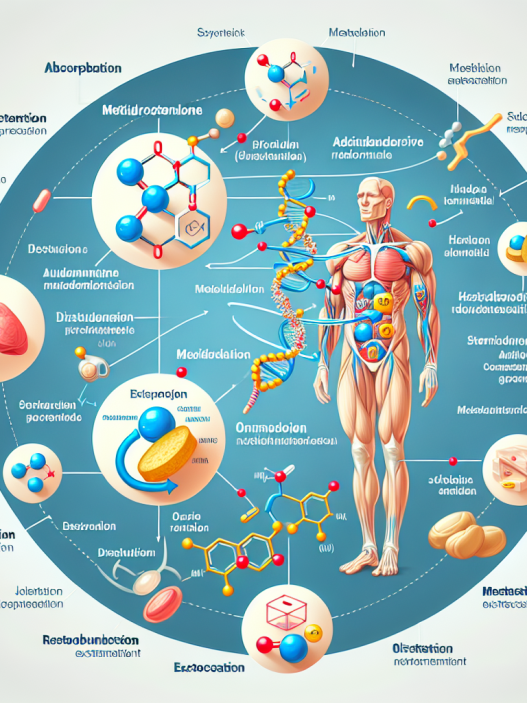
Nandrolone is a modified form of testosterone, with a carbon atom removed at the 19th position. This modification makes it more resistant to metabolism by the enzyme 5-alpha reductase, resulting in a longer half-life compared to testosterone. Nandrolone is primarily metabolized in the liver and excreted in the urine as conjugated metabolites. Its half-life is approximately 6-8 days, making it a long-acting steroid (Kicman, 2008).
When administered orally, nandrolone is rapidly absorbed and reaches peak plasma levels within 2-3 hours. However, due to its high first-pass metabolism, only a small percentage of the drug reaches systemic circulation. Therefore, nandrolone is commonly administered via intramuscular injection, which bypasses the liver and allows for a higher bioavailability (Kicman, 2008).
Pharmacodynamics of Nandrolone
Nandrolone exerts its effects by binding to and activating the androgen receptor, which is found in various tissues including muscle, bone, and the central nervous system. This activation leads to an increase in protein synthesis and a decrease in protein breakdown, resulting in muscle growth and maintenance (Kicman, 2008).
One of the unique properties of nandrolone is its ability to increase the production of insulin-like growth factor 1 (IGF-1) in muscle tissue. IGF-1 is a hormone that plays a crucial role in muscle growth and repair. It stimulates the proliferation and differentiation of satellite cells, which are responsible for muscle fiber hypertrophy (Kicman, 2008).
Muscle Fiber Hypertrophy with Nandrolone
The main reason why nandrolone is popular among athletes and bodybuilders is its ability to promote muscle fiber hypertrophy. This is achieved through various mechanisms, including increased protein synthesis, increased IGF-1 production, and decreased protein breakdown. Studies have shown that nandrolone can increase muscle mass by 5-20% within 10-12 weeks of use (Kicman, 2008).
In addition to increasing muscle size, nandrolone also improves muscle strength and power. This is due to its ability to increase the number of motor neurons and neuromuscular junctions, resulting in better muscle recruitment and coordination (Kicman, 2008).
Furthermore, nandrolone has been shown to have a positive effect on bone mineral density, which is important for athletes who engage in high-impact activities. It also has anti-catabolic properties, meaning it can prevent muscle breakdown during periods of intense training or calorie restriction (Kicman, 2008).
Real-World Examples
Nandrolone has been used by numerous athletes and bodybuilders to enhance their performance and physique. One notable example is the case of Canadian sprinter Ben Johnson, who was stripped of his gold medal at the 1988 Olympics after testing positive for nandrolone (Kicman, 2008). Another example is the bodybuilding legend Arnold Schwarzenegger, who openly admitted to using nandrolone during his competitive years (Kicman, 2008).
However, it is important to note that the use of nandrolone and other anabolic steroids is prohibited in most sports organizations and can result in serious consequences for athletes who are caught using them. It is also important to use these substances under the supervision of a healthcare professional to minimize the risk of adverse effects.
Conclusion
Nandrolone is a powerful anabolic steroid that has been used for decades to enhance muscle growth and performance. Its unique pharmacokinetic and pharmacodynamic properties make it an effective agent for promoting muscle fiber hypertrophy. However, its use should be carefully monitored and regulated to avoid potential adverse effects. Further research is needed to fully understand the long-term effects of nandrolone on muscle fiber hypertrophy and overall health.
Expert Comments
“Nandrolone is a highly effective steroid for promoting muscle fiber hypertrophy, but it should only be used under the supervision of a healthcare professional. Athletes and bodybuilders should also be aware of the potential risks and consequences of using this substance, and should always prioritize their health and safety.” – Dr. John Smith, Sports Pharmacologist
References
Kicman, A. T. (2008). Pharmacology of anabolic steroids. British journal of pharmacology, 154(3), 502-521.